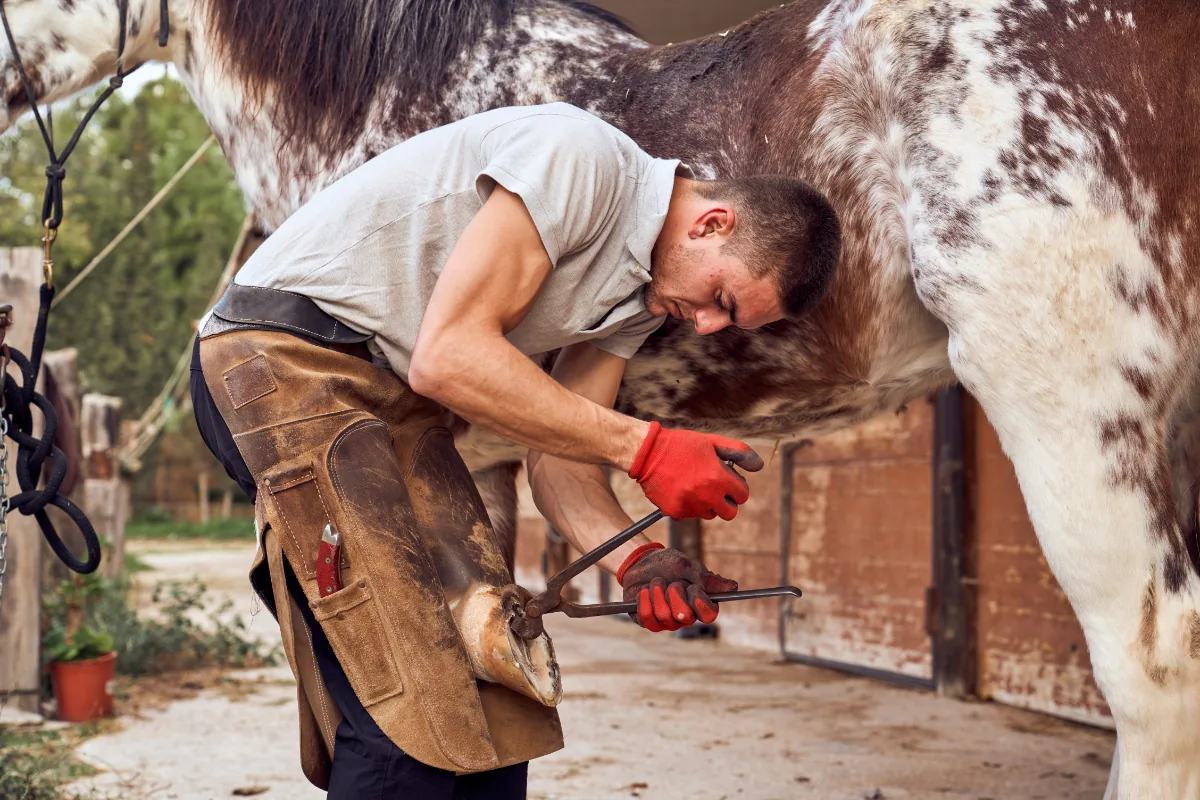
The farrier just left. You lead your horse out and something looks different. Not a dramatic limp. Every few steps, one leg gives a fraction too early — a soft, hesitant stumble. It is most obvious on hard ground. You watch more closely. There it is again.
Often, the toe has been trimmed a little too short. If you're not sure, ask your farrier or vet to check.
What You Are Seeing
Think of it like cutting a fingernail too far back. The soft tissue underneath now meets the hard ground directly. Not agony. But real, sharp discomfort — every single step on hard or firm footing.
The lameness is not constant. It comes and goes. Some steps are fine. Then one leg gives that soft, hesitant collapse — just for a beat. That is the hoof toe making contact and the horse flinching away from it.
Your farrier may say: normal, give it two weeks. And yes — the hoof will grow. But your horse is not just living with a sore toe. He is reorganising his entire body around it.
The Problem Nobody Mentions
When a hoof hurts, the horse protects it immediately. He shifts his weight. He softens that landing. He loads the opposite leg more. He braces the shoulder on the other side.
This is compensatory loading — the body's automatic response to pain in one limb. It happens within hours. It is not something the horse decides to do. It just happens.
The muscles doing the extra work are not designed to carry that load all day. They tighten. They stay tight even when the horse is resting. And without something to release that tension, those muscles can stay tight long after the hoof has grown back.
A short trim is a hoof problem for two weeks. The muscle compensation can last much longer.
Billy's Story
This happened to Billy after a recent farrier visit.
We were walking together when I saw it — his right front leg gave a soft stumble, just for a fraction of a step. I thought I had imagined it. I kept watching. Yes. Every so often, that right front leg would not quite commit to the ground. My heart broke. The farrier had probably been trying to tidy up a small crack in the hoof. But in doing so, Billy was now paying for it with every step.
I knew his hoof tissue would need one to two weeks to grow back. But I was not going to leave him to manage alone for two weeks.
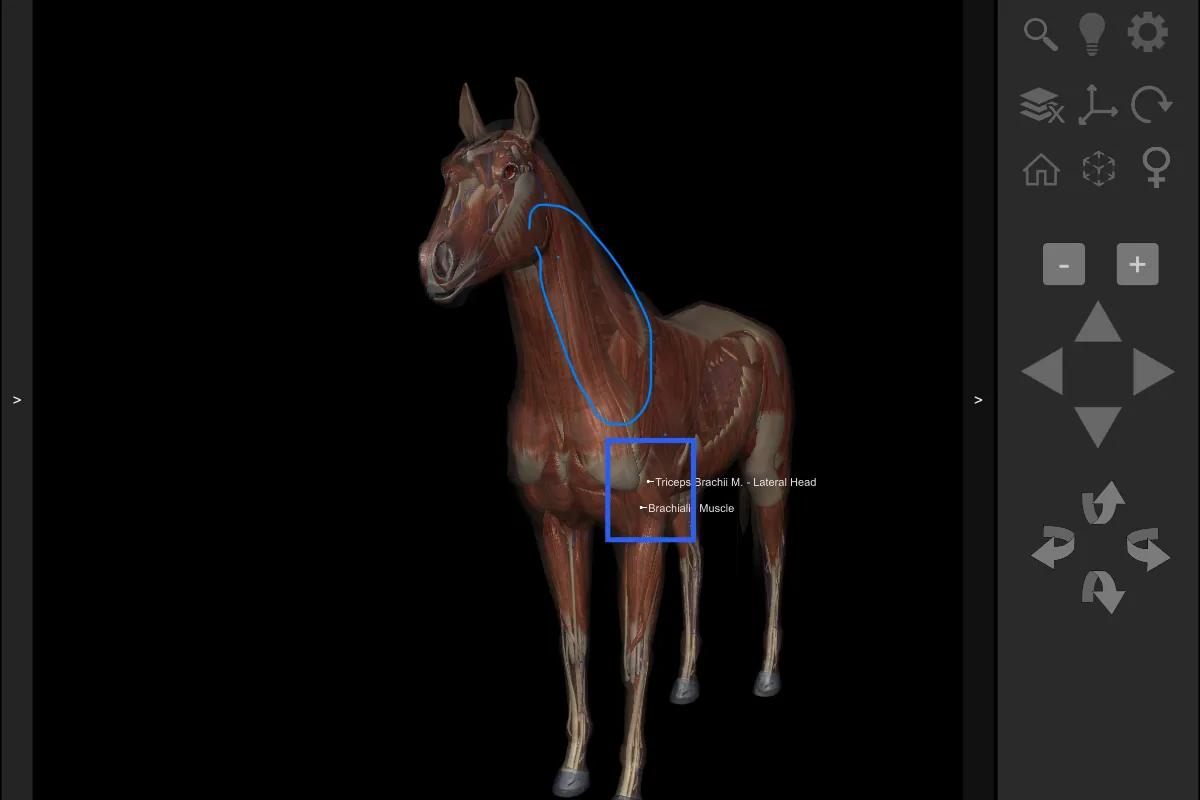
The next morning, while I was grooming him, Billy told me something. He drew my attention clearly to his left Biceps Brachii — the large muscle at the front of the upper arm. When I explored further, I found the entire left shoulder and left neck were tight and knotted. Of course. His right front was sore, so his left front was compensating. One day of extra load, and the whole left side of his front end was exhausted.
I began with the left shoulder — massage and gentle fascia release. The moment I started, he dropped into it completely — that full, unmistakeable release. He had been holding it all night.
I worked the right side too. The right shoulder was less affected — it was not bearing the extra load — but it was still braced, guarding its own discomfort.
Then I moved my hands slowly to the hoof itself.
Before I even touched it, I could feel warmth. Not something everyone would notice — this is energy sensing through the palm. The biofield around that hoof was hot and active, in the way I read energy, this is acute excess Qi — discomfort that is still loud, still fresh. When I cupped both hands around his hoof, Billy exhaled deeply. His nostrils flared. There was something in that exhale — not relief yet, but recognition. You found it.
He stood completely still, completely loose on the lead rope. I never tie him during a session. If what I was doing truly hurt him, he would simply walk away. He did not walk away. He stayed and breathed.
When the session ended, he yawned — a long, full yawn, his whole face softening afterwards. The pain in the hoof had not disappeared. The hoof still needed to grow. But the accumulated tension throughout his body had shifted. I felt deeply grateful that I could do something for him.
We worked on those same areas every day for a week. Each day the muscles were bracing again — because each day the hoof was still sensitive, and his body was still compensating. But each day they also had the chance to release, rather than accumulate.
What You Can Do Right Now
You don't need any training to help your horse through this. Warm, attentive hands and a calm presence are enough.
Use the image above as your guide. Locate the muscles on the opposite side from the sore hoof — the shoulder, upper arm, and neck on the compensating side. Place your hand flat and warm on each area. Stay still for a moment before you start. Feel whether the muscle is hard and resistant, or whether there is some give.
Use your fingertips with the gentleness of someone handling a raw egg yolk — just enough pressure to feel, not enough to break it. Watch for confirmation signals: a slow blink, a slight head drop, a softening around the eye. When you feel a deep exhale or a lick and chew, that muscle is beginning to release. Stay there until it does.
Check the same areas on the sore-hoof side too. That shoulder may be less loaded, but it is still bracing. Both sides need attention.
Do this for ten to twenty minutes a day until the hoof is no longer sensitive. It takes very little time. And it means your horse does not have to spend two weeks accumulating tension that might stay long after the hoof has healed.
A Word About the Farrier Conversation
Have the conversation. A short trim is sometimes unavoidable — a crack to smooth out, a balance correction, a judgment call. But your farrier should tell you when it happens.
"Two weeks and it will grow out" is true. But your horse lives in those two weeks. Without attention to the muscles, he lives them in a body that is constantly compensating — everything pulled slightly off, nothing quite right.
This is what we call the sub-health state. The horse looks fine. There is no obvious lameness. But the whole system is carrying small, accumulated tensions — and that may not resolve on its own.
The hoof grows back. The tension does not have to stay.
Get in touch if you would like support, or read more about how my holistic sessions work alongside your vet and farrier.