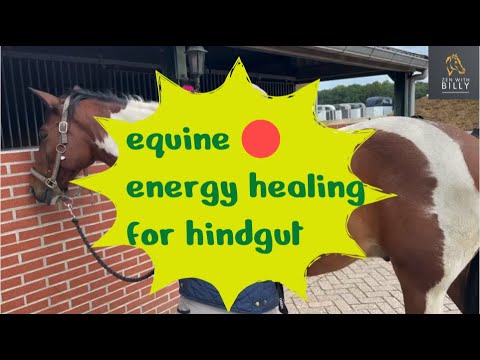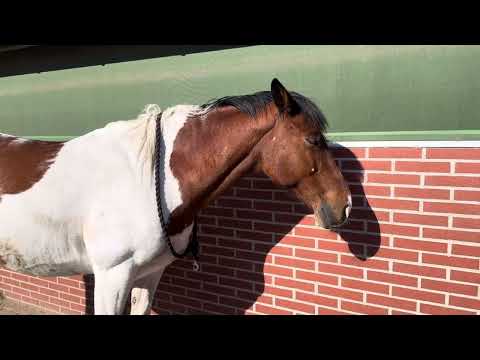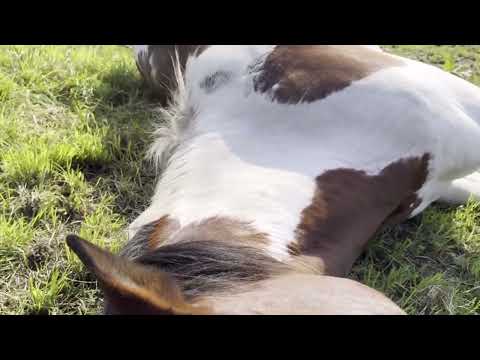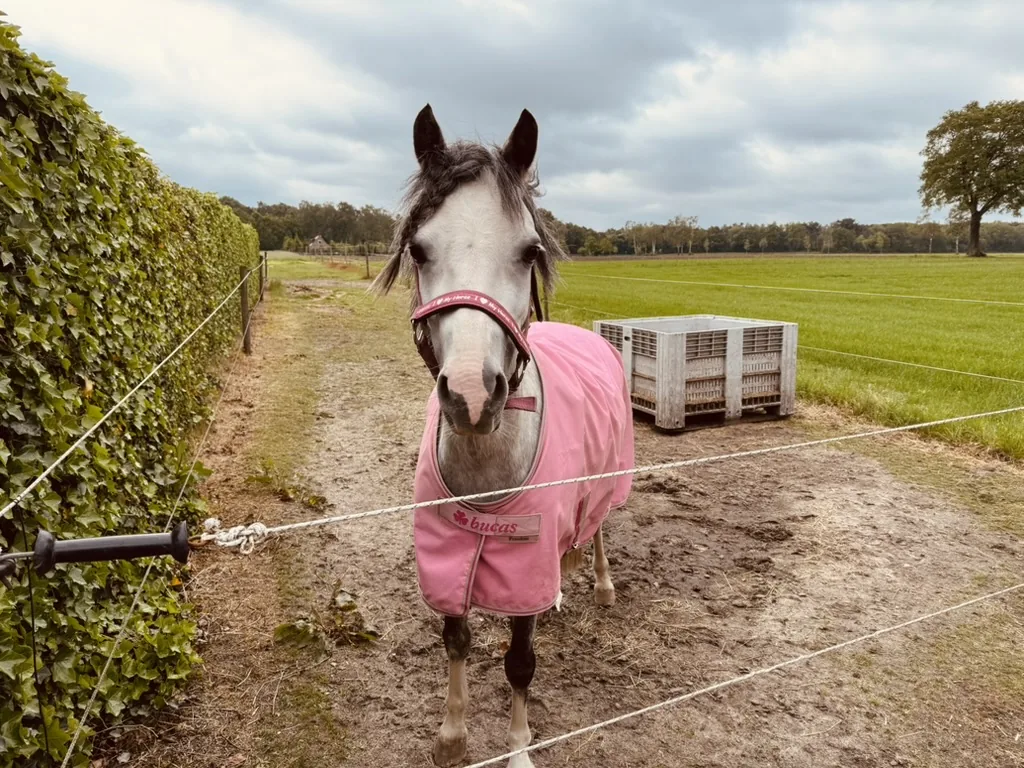
All the humans Olivia had known were unkind. So she had learned the only language that kept her safe: threat and force. Biting and kicking weren't aggression — they were survival. Even the most experienced stable staff gave her a wide berth.
My approach was simple. Voice is also energy. For the first two weeks, I visited her stall for three to five minutes a day. I didn't try to touch her, train her, or change her. I just talked — about the weather, about whether she liked her food today. The words didn't matter. What mattered was that she could feel my intentions through my voice. That my energy was not a threat.
After two weeks, she was calm when I was nearby. But she still showed aggressive threats from time to time. When she did, I simply told her: no. When she stopped, I told her: good girl. Building a shared language — not through punishment, but through clarity. What I like, what I don't like. Consistently, calmly.
Gradually, I opened the gate. I taught her to stay calm while I removed her fly mask. I gave her applause when she did well. Small victories, honest feedback. Sometimes she would still snap when something unfamiliar startled her — a passing trolley, a car moving outside. Instead of punishing her, I told her I didn't like it and remained calm.
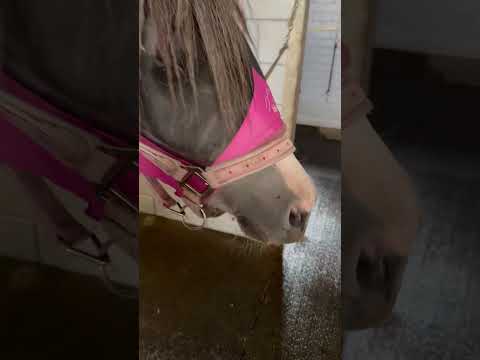
Horses sense energy, not objects. A moving car is frightening not because of its shape, but because of its energy — a large mass with strong, unfamiliar vibration. For a horse with a difficult past, fast hand movements carry the same charge: the energy of past punishment. So every action with Olivia had to be slow, deliberate, and clear.
A nervous horse cannot learn anything. So the first goal was always safety — not training. Only once she felt safe could we start to work. And once we started, she progressed beautifully. She began to understand that humans can be fair. That trust is possible.